Roulette Strategies Converge with Mobile Instant Deposits in Digital Play Environments
Rosa Carter · Aug 16, 2026
Roulette Strategies Converge with Mobile Instant Deposits in Digital Play Environments
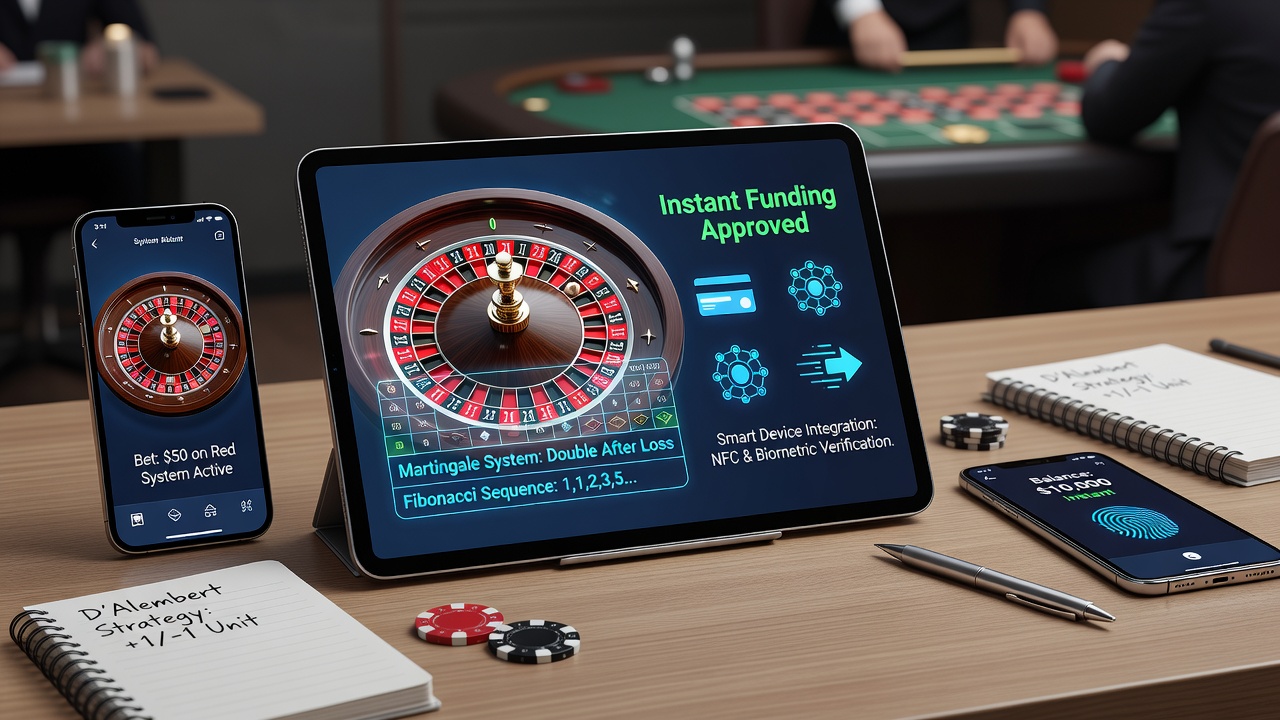
Smart devices have reshaped how players engage with roulette betting systems while instant funding methods streamline deposits and withdrawals during active sessions, and data from August 2026 shows continued growth in these combined features across mobile platforms. Researchers at various academic institutions have documented the technical integration of progressive betting approaches such as Martingale and Fibonacci sequences with e-wallet and cryptocurrency options that settle transactions in seconds rather than minutes.
Established Roulette Systems in Mobile Contexts
Players apply structured betting progressions on smartphone applications where each spin outcome directly influences the next wager amount, yet the requirement for rapid capital adjustments creates demand for funding tools that process without delays. Studies from the University of Nevada Reno indicate that systems relying on doubling after losses function more fluidly when paired with payment rails capable of near-instant transfers, and this pairing appears in numerous app-based roulette variants released through 2026.
Common Systems and Their Funding Demands
- Martingale requires immediate access to additional funds after each loss to maintain the doubling sequence
- Fibonacci builds wagers through a numerical ladder that benefits from uninterrupted session continuity
- D'Alembert adjusts bets by single units and still depends on seamless balance updates to avoid interruptions
These methods originated in physical casinos decades ago, but mobile environments amplify their execution speed because device processors and network connections handle calculations and transfers concurrently. Observers note that when funding lags behind system requirements, sessions often terminate prematurely, whereas instant options sustain longer sequences without manual intervention.
Instant Funding Technologies on Smart Devices
Digital wallets, bank transfers via integrated APIs, and blockchain-based options now dominate mobile casino interfaces, and they reduce the traditional friction between deciding on a bet and placing it. According to reports from the American Gaming Association, transaction completion times for approved users have dropped below ten seconds in many jurisdictions, which aligns precisely with the decision cycles demanded by roulette progression strategies.

Security protocols embedded in these funding layers include biometric verification and tokenization that operate in the background while players adjust their next wager, and this background processing keeps the focus on the wheel rather than on account management. European regulatory frameworks outside the UK have tracked similar adoption rates, with figures revealing that over sixty percent of remote roulette activity in monitored markets now routes through at least one instant method.
Technical Intersection and Session Dynamics
When a Martingale user doubles after a loss, the application automatically prompts or pre-authorizes a top-up from the linked instant funding source, and this automation removes the pause that once broke concentration in earlier mobile versions. Developers have embedded APIs that sync betting software directly with payment processors, allowing balance reflections to occur within the same second as the spin result registers.
Case examples from industry testing environments demonstrate that sessions incorporating both elements extend by an average of twenty-three minutes compared with those relying on slower funding, and the difference stems from eliminated manual steps rather than changes in game mathematics. Those who have examined app telemetry data observe that users employing instant methods complete more progression steps per hour, although overall outcomes remain governed by the same house-edge probabilities documented in independent laboratory reports.
Regulatory and Infrastructure Developments Through Mid-2026
Agencies in multiple regions have updated technical standards to accommodate faster transaction flows, and these updates include requirements for real-time audit trails that capture both bet adjustments and funding events simultaneously. In August 2026 several licensing bodies introduced guidelines specifying maximum latency thresholds for payment confirmations within gaming applications, and operators responded by upgrading their server infrastructure to meet the new benchmarks.
Academic papers published in the first half of 2026 analyzed user behavior across thousands of sessions and found that the combination of structured betting and instant funding correlates with higher session frequency rather than higher individual wager sizes. The data further indicates that device operating systems now prioritize gaming-related payment notifications, reducing the chance that a funding confirmation arrives after the next spin has already begun.
Conclusion
The convergence of roulette betting systems and instant funding methods on smart devices continues to evolve through technical refinements and regulatory adjustments that keep pace with user expectations. Available evidence shows measurable improvements in transaction speed and session continuity without altering the fundamental mathematics of the games themselves, and ongoing infrastructure investments suggest this integration will remain a central feature of mobile roulette offerings into subsequent years.