Global Biometric Shifts Transforming Remote Gambling Verification
Tina Reed · Aug 21, 2026

Global Biometric Shifts Transforming Remote Gambling Verification
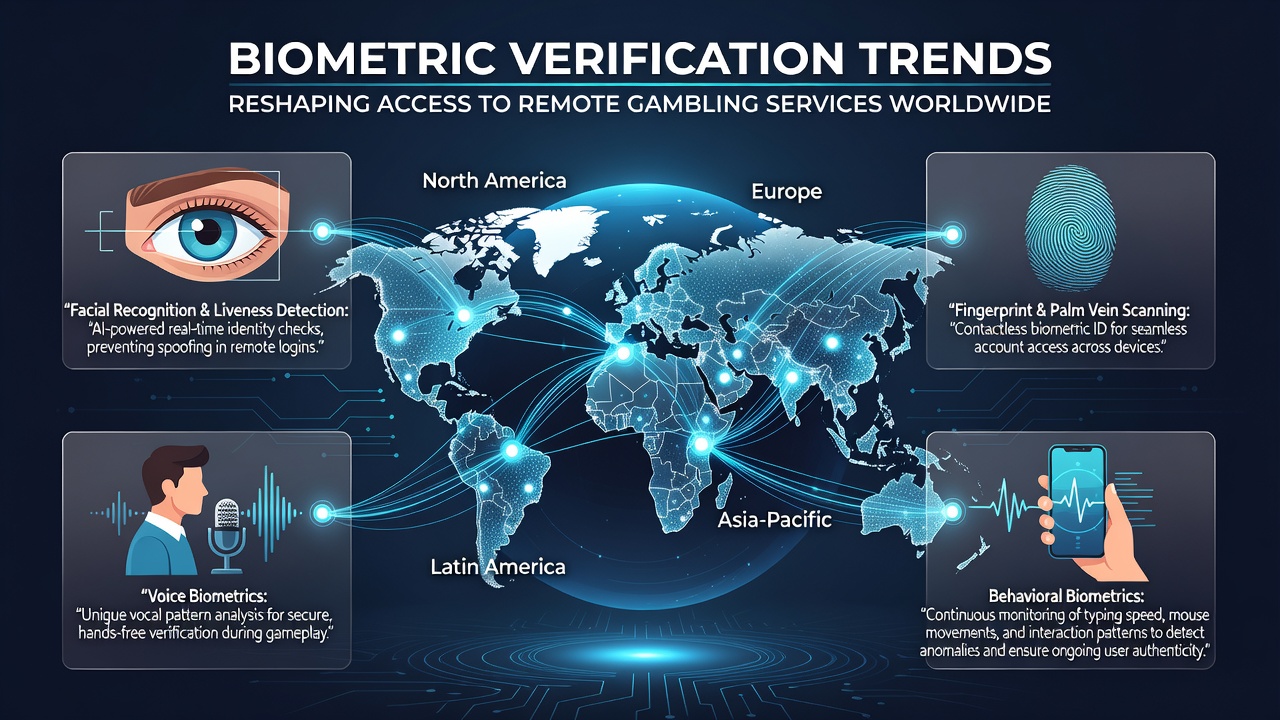
Data from multiple markets shows biometric systems gaining ground in remote gambling platforms as operators seek faster identity checks and regulators push for stronger safeguards against underage access and fraud, while facial recognition, fingerprint scanning, and voice analysis lead adoption rates in several regions.
Current Market Adoption Patterns
Operators in North America and parts of Europe integrate these tools at signup and during high-value transactions, and figures from industry reports indicate that platforms using biometric checks complete verification in under 30 seconds compared with traditional document uploads that often take minutes or hours. Research from academic institutions highlights how mobile devices now carry built-in sensors that support these methods without extra hardware, allowing seamless logins for players who opt in.
One study from a Canadian university tracked remote gambling sites across provinces and found a 45 percent increase in biometric usage between 2024 and 2025, driven by provincial rules that favor real-time identity confirmation. In Australia, government data reveals similar momentum as state regulators encourage operators to deploy iris or palm-vein recognition for high-risk accounts.
Technological Drivers Behind the Change
Artificial intelligence refines accuracy by comparing live scans against stored templates, and experts note that liveness detection features now distinguish between real faces and photos or deepfakes with over 99 percent reliability in controlled tests. Voice biometrics add another layer during customer support calls or withdrawal requests, while behavioral signals such as typing patterns combine with physical biometrics to create multi-factor profiles.
Cloud-based systems handle the heavy processing so that smaller operators avoid costly on-premise setups, and integration with existing payment gateways lets verification happen right before deposits. August 2026 saw several European platforms roll out updated software that links biometric data across multiple sites under strict consent rules, reducing duplicate checks for frequent players.
Regional Regulatory Landscapes
European authorities outside the UK emphasize data protection alongside verification speed, and directives require explicit user consent before any biometric template storage. In the United States, state-level gaming commissions in Nevada and New Jersey accept facial recognition results from certified vendors, provided operators meet encryption standards that prevent template theft. Canadian provinces continue to test hybrid models that combine biometrics with traditional ID upload for first-time users.
Australian regulators focus on remote betting apps that serve international customers, and new guidelines released in early 2026 mandate periodic re-verification using biometrics after six months of inactivity. Industry groups such as the European Gaming and Betting Association publish best-practice documents that help operators align local rules with technical capabilities across borders.
Security and Privacy Considerations
Biometric data remains sensitive because templates cannot be changed like passwords, so developers store encrypted mathematical representations rather than raw images. Studies from research organizations show that well-designed systems limit access to verification servers and use tokenization to avoid exposing full profiles during routine checks. Yet breaches in related sectors remind operators that robust cybersecurity must accompany any biometric rollout.
Players retain rights to delete their data in most jurisdictions, and platforms must provide clear opt-out paths without blocking service access entirely. International standards bodies continue to refine testing protocols that measure both accuracy and resistance to spoofing attempts across different skin tones and age groups.
Impact on Player Experience and Operator Operations
Users report quicker account activation and fewer interruptions during play sessions once initial setup completes, while operators note reduced chargeback rates linked to identity disputes. Case examples from major platforms reveal that biometric-enabled withdrawals process in hours rather than days, because verification happens automatically at key checkpoints. Smaller sites sometimes partner with specialized verification firms to avoid building the technology in-house, and this approach spreads advanced tools to emerging markets in Latin America and Southeast Asia.
Training for support staff now includes handling biometric consent questions, and dashboards track consent renewal rates so operators stay compliant. Data indicates that regions with clear biometric guidelines see faster market growth compared with areas where rules remain unclear.
Conclusion
Biometric verification continues to expand across remote gambling services as technology matures and regulatory expectations rise, with facial, fingerprint, and voice methods proving most common. Regional differences shape implementation speed, yet the overall direction points toward broader acceptance paired with stronger privacy safeguards. Observers tracking developments through 2026 and beyond note that continued collaboration between operators, vendors, and authorities will determine how smoothly these systems scale worldwide.